Wadi-what? Wadis, for those of you who haven’t been, are the best, if not best, thing to happen to deserts. Some wadis are dry riverbeds. Other wadis are hidden oasises of tourqouise blue streams, springs, and freshwater pools, speckled with the odd date palm here and there. Wadis are the reason why Oman should be on your travel bucket list.
Looking to escape some of the long North European winter ahead of us, we made our way over to Oman for a week in December. What we didn’t expect to find in addition to the wadis were gorgeous mountains, canyons, and sandy deserts.
How to spend a week in Oman: Suggested travel itinerary
The below was the route we followed, but we also agreed that we could have skipped the Wahiba Sands desert and the coastal route (though our favourite wadi – Wadi Shab – does require going this way). Mainly because we already had been to deserts with more stunning sanddunes in Namibia than what we saw in Oman and and heading to ocean added a lot of extra driving time to our trip we would have been happy to spend inland in the mountains area closer to Muscat.
Day 1: From Muscat to Jabal Al Akhdar
We arrived very early in the morning (3am…) and, after picking up our car rental, first checked into a hotel to catch some sleep before starting our roadtrip. In Muscat, we stocked up on groceries at a LuLu Hypermarket. (We didn’t have a cooler box, but if you manage to pack one in your suitcase, that would be very helpful to keep veggies and fruits fresh in the hot climate.) We picked up camping gas for our camping stove (a little MSR PocketRocket) at Thursday Trip Mawaleh, a camping store that wasn’t quite REI-quality.
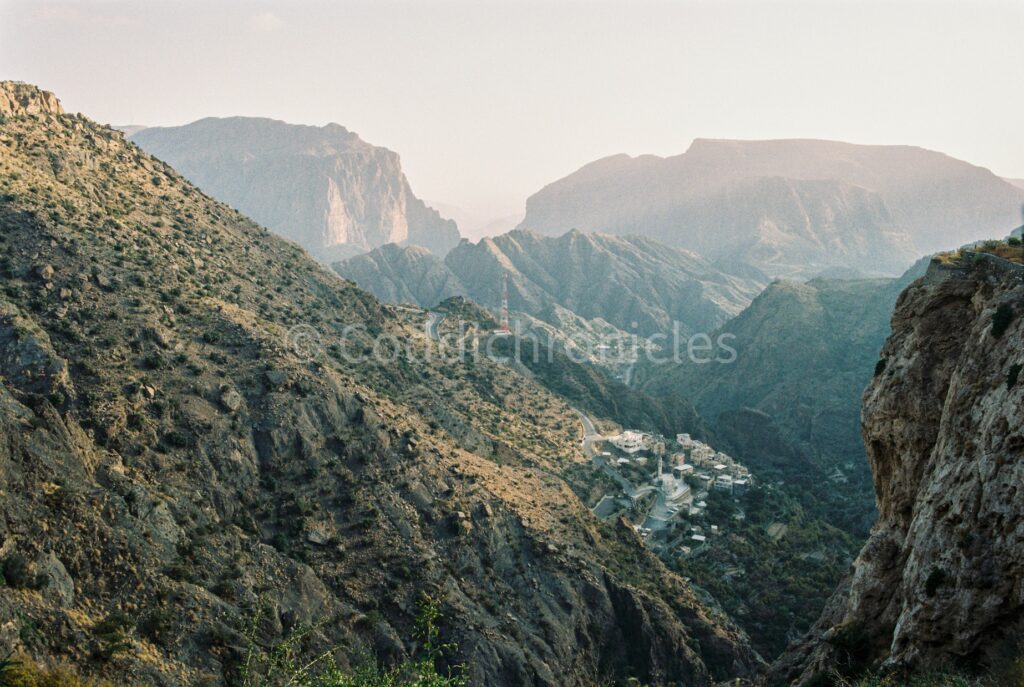
From there, a scenic drive mostly along a motorway winds through rugged landscapes before climbing to Jabal Al Akhdar – a cool, elevated plateau renowned for its terraced farms and sweeping canyon views. Once there, you can hike along picturesque village trails, visit traditional mountain settlements, and admire the famous pomegranate terraces (if in season, which it was not when we were there). A 4WD vehicle is required for the final ascent to Jabal Al Akhdar.
Since we arrived relatively late in the day, we only had time for a short loop walk, but we did manage to see the major viewpoints along the way. You can follow the route we did on Komoot here.
We stayed at JA Accommodation and had dinner nearby at a Yemeni spot (Jabal Akhdar Grills Kitchen) which was very cheap, very informal looking, but delicious. The staff were really friendly and helpful with figuring out what we should order.
Day 2: Jabal Al Akhdar to Jebel Shams via Misfat al Abriyyin
The next morning we heading back down the winding, steep road to head towards Misfat al Abriyyin.
Along the way we stopped at a lookout spot just outside of Birkat Al Mouz for photos of an abandoned clay city on the hillside beyond a field of date palms. To get there, head to this address on Google Maps that will take you towards a cellphone tower. You can park there and walk around for your pics.
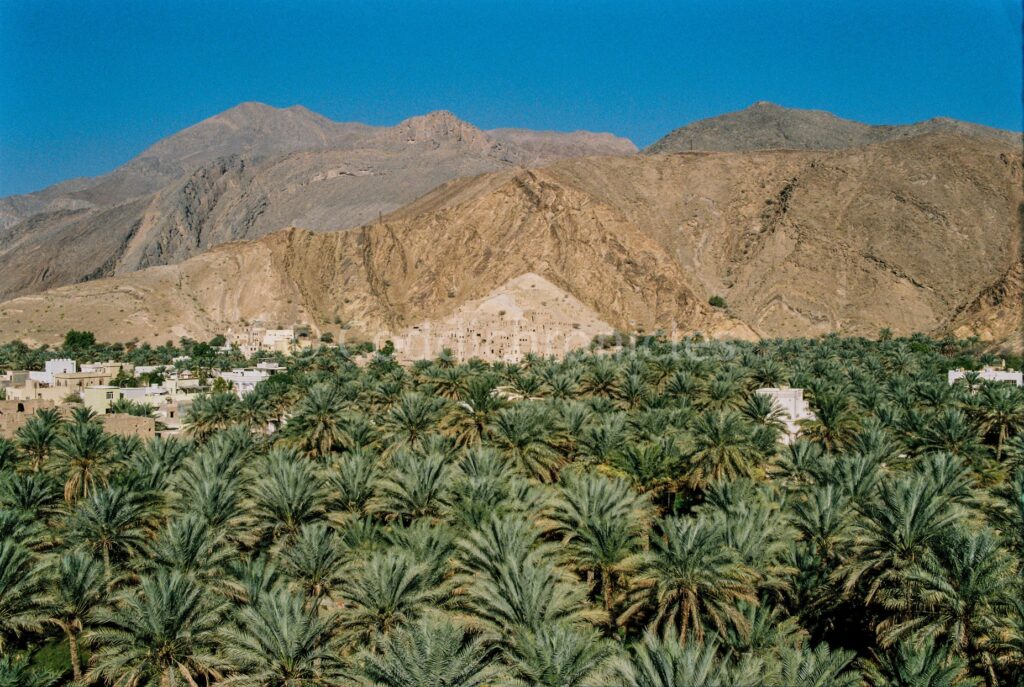
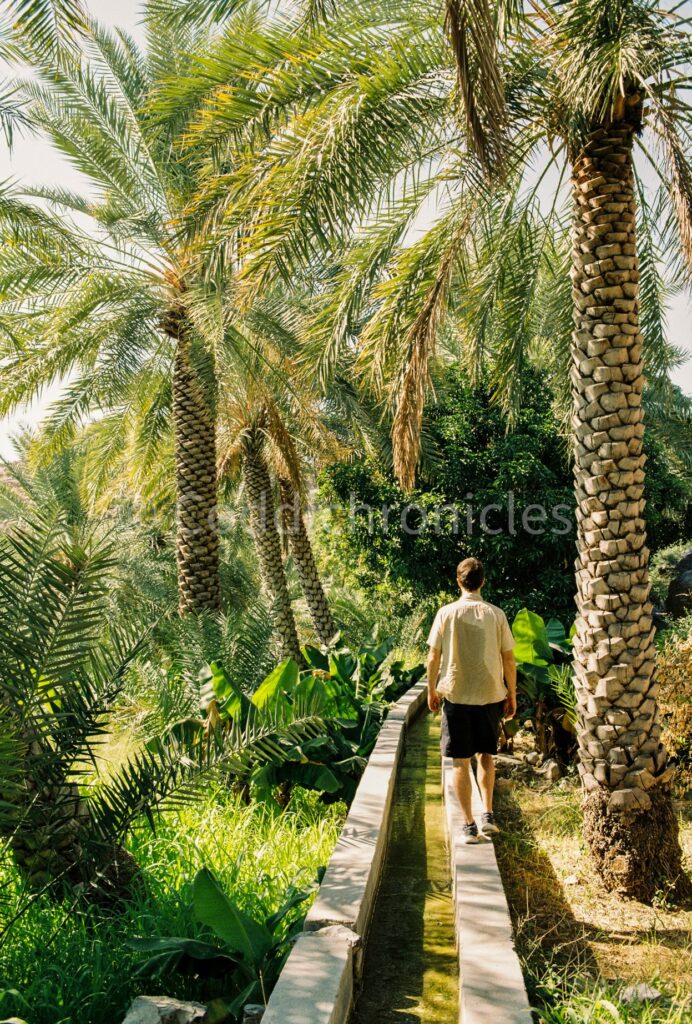
From there we drove onwards to Misfat al Abriyyin – this village was one of our favourite of the trip. We parked outside of the town and wandered in by foot. Even though it was really hot outside, we enjoyed walking along the ancient irrigation channels through the date palms (route here). There were several cafes in the village itself you could get a cold drink from. In hindsight, we would have loved spending the night here since it was a very beautiful place to be in for a longer time.
From Misfat, we drove onwards to Jebel Shams – a massive canyon. The road to Jebel Shams was partly paved and partly dirt road, but totally fine compared to the roads we were used to from South Africa. Up on Jebel Shams, we set up camp (Google Maps location is here) in time to watch the sunset. Jebel Shams is about 2000m above sea level, so it does get a bit chilly at night, but not so cold that you need winter gear for the night.
Day 3: Jebel Shams to Wadi Damm
Our main goal at Jebel Shams was to complete the famous Balcony Walk, one of Oman’s most spectacular hiking trails. After enjoying breakfast while watching the sunrise over the mountains, we packed up camp and drove to the trailhead at the very end of the road.
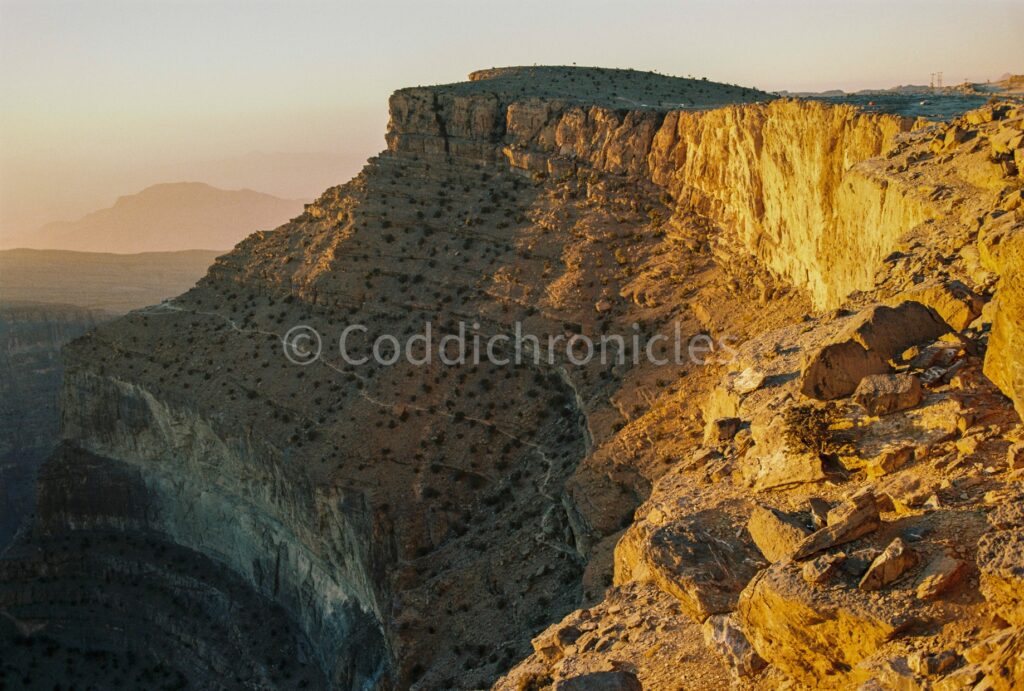
The Balcony Walk is an out-and-back hike of around 10 km that follows a narrow ledge carved into the cliffs high above Wadi Ghul, often referred to as Oman’s “Grand Canyon.” Although the distance may sound challenging, the trail is relatively easy, with only gentle ascents and descents, making it suitable for anyone with a reasonable level of fitness. Along the way, you’ll be rewarded with breathtaking views of the sheer canyon walls, dramatic rock formations, and tiny abandoned terraced villages.
One thing to keep in mind is the lack of shade. The trail is almost entirely exposed, so it’s best tackled early in the morning or later in the afternoon, especially during the warmer months. Be sure to carry plenty of water.
We were a bit unlucky the day we did the hike – a large construction vehicle was driving on the road just above the hiking trail and managed to dislodge boulders onto the trail. Luckily no one was hurt, but we were quite shocked that the construction crew was completely unaware of what could have happened.
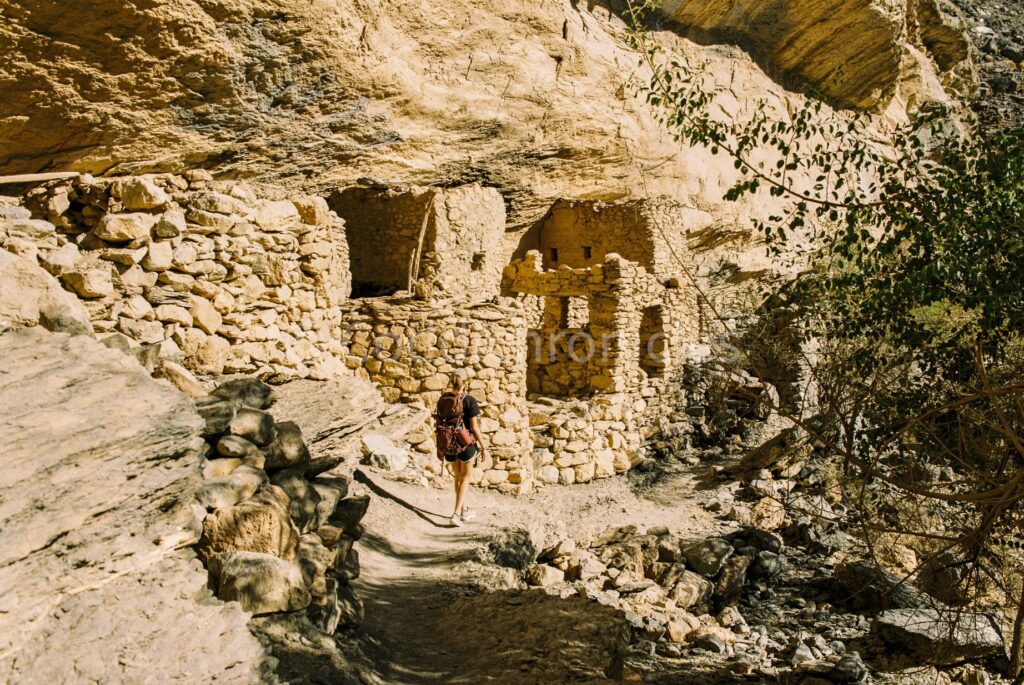
From Jebel Shams, we drove a short way (about an hour) to Wadi Damm along a narrow dirt road. Luckily we only passed an oncoming vehicle once along this road – there wasn’t much space, given the mountain wall on one side of the road and a canyon on the other.
Wadi Damm is a scenic canyon in the Hajar Mountains, known for its clear freshwater pools and rugged rock formations. Although it doesn’t get many visitors, and it’s not as picturesque as some of the other wadis in the region, we really enjoyed the fact that we had the wadi almost to ourselves minus a few other people.
The walk into the wadi is pretty straightforward – the best is to follow the cairns and markers. You’ll get to a large pool of water where you can stop your walk, or you can climb up over the rock by using the rope/chain hanging at the end of the pool. The reward at the top is that you will come to a series of pools you can swim in. The whole walk is about 6km total, out and back.
We chose to camp in this wadi for the night – we were the only ones which was a bit unnerving at first, but ended up being fine. We found a spot near ancient petroglyphs which was very cool. They’re not super obviously marked, but you can find one spot near where the date palm grove meets the irrigation channel.
Day 4: Wadi Damm to Nizwa
This is the most history and fort heavy day of the trip. If you’re a history buff, you could easily stretch this day out across a few days to visit every fort along the way.
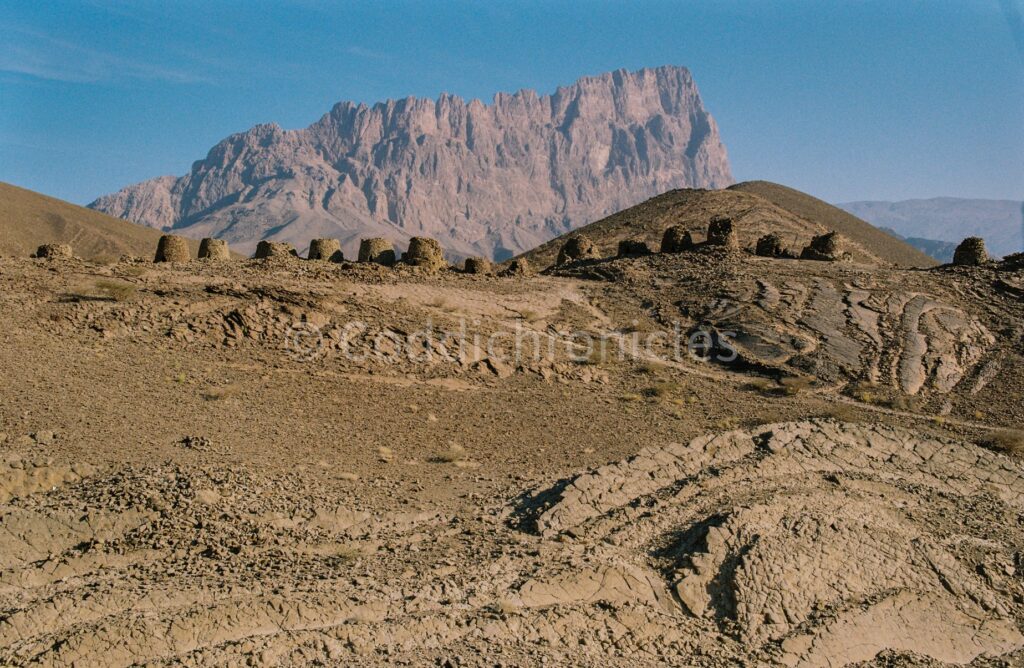
We started our day off by visiting the Al Ayn Beehive Tombs – if you can manage to see these for sunset, the lighting would be most ideal then. To get to the tombs, we left the paved road and drove down a rocky riverbed (the 4WD and clearance did help a bit here, but still, would have been okay in a sedan). We parked the car on the riverbed and walked the last stretch up to the tombs. They’re completely free to visit and feel oddly overlooked.
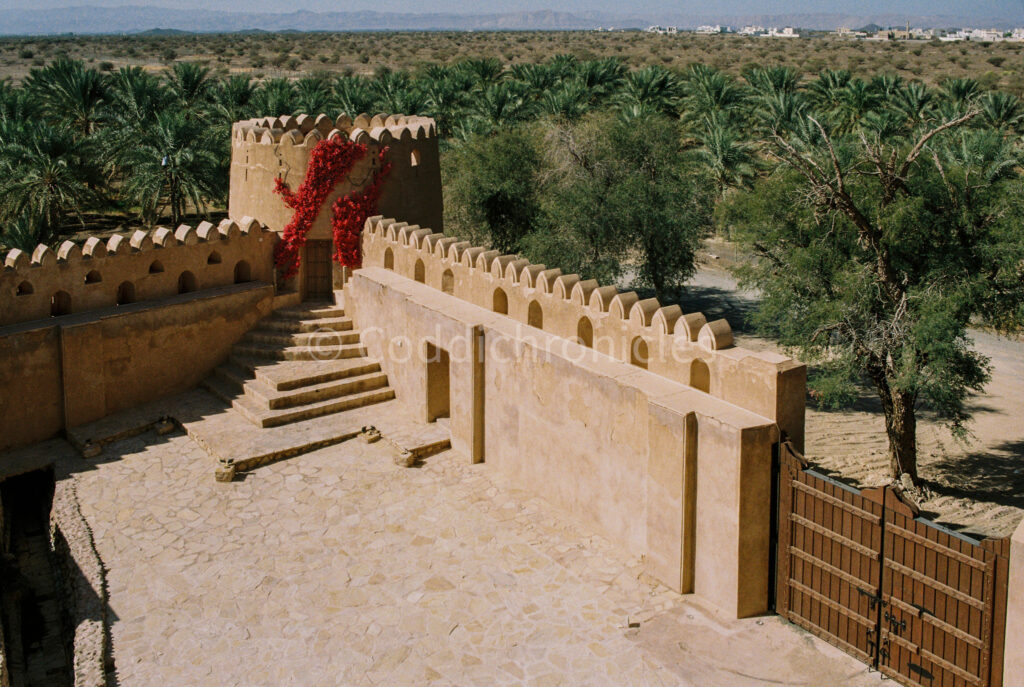
From the tombs we rejoined the motorway (Route 21) and followed this to Jabreen Castle where we spent a while exploring and learning about Omani history. This is a beautifully preserved 17th-century fortress known for its elegant architecture and intricate ceilings. Built during the reign of Imam Bil’arab bin Sultan, the castle was more than a defensive stronghold – it was a centre for learning, art, and Islamic scholarship.
Afterwards we headed to Al Sharaa Mills and Dates to pick up dates and that delicious pistachio spread that you find inside of Dubai chocolate. After a brief stop, we drove onwards to Bahla Fort which we opted to skip – instead we visited Bahla Historical Mosque which is one of the oldest mosques in Oman. Women need to enter fully covered with a headscarf, but clothing is provided if you don’t have.
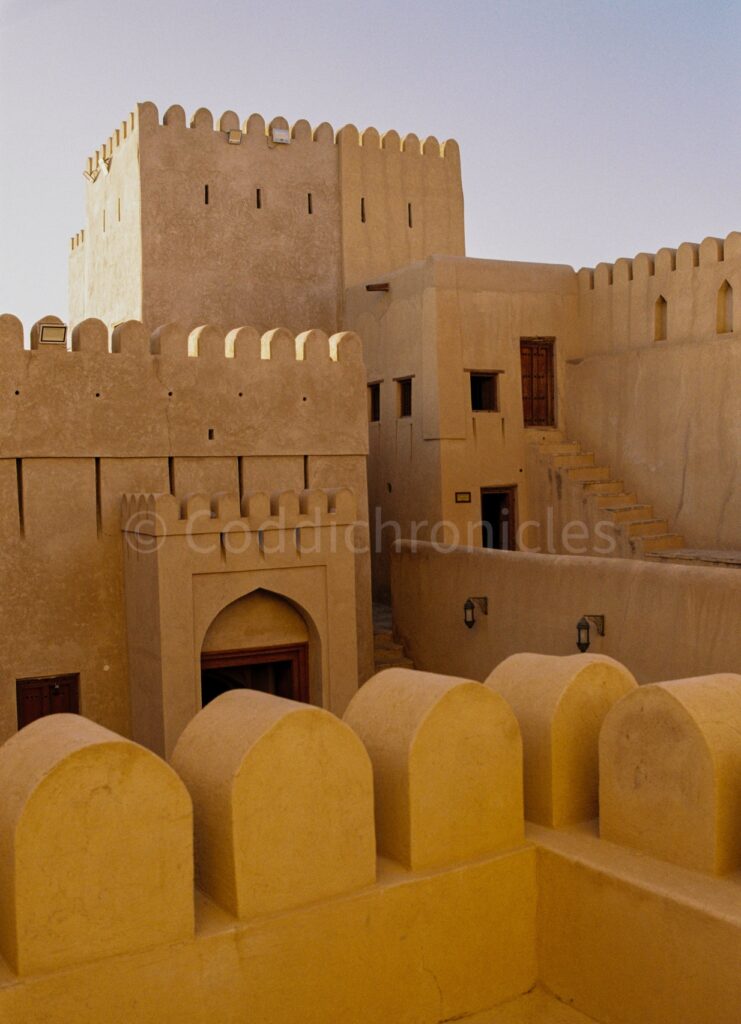
Since we had time to spare, we made a quick stop at the Tanuf Castle Ruins, easily accessible just off the road. We didn’t explore too long though because the heat was insane. From there we drove onwards to Nizwa making it to Nizwa Fort in time for the sunset. This was perfect timing because the architecture was stunning in the evening light.
Nizwa itself is an interesting small city to walk around at night. Nizwa has long been considered the cultural and spiritual heart of Oman, serving as a major center of trade, Islamic learning, and governance throughout the country’s history. Nizwa’s traditional souqs offer a glimpse into Omani heritage, with bustling stalls selling everything from silver jewelry and handmade crafts to spices, dates, and other local delicacies.
Day 5: Nizwa to Wahiba Sands
Unfortunately, there’s not much to see along the route this day from Nizwa to Wahiba Sands. We chose to stop at the Oman Across Ages Museum in the morning to avoid getting to the desert in the hot midday sun. The museum is a bit oddly situated – out in the middle of nowhere really but also a fantastic piece of architecture. It ended up providing us with a really interesting perspective of Omani history – we learnt a lot we didn’t know about the country from its geological formation up until the present day. It is of course presenting history from the perspective of the ruling government, but still interesting nonetheless.
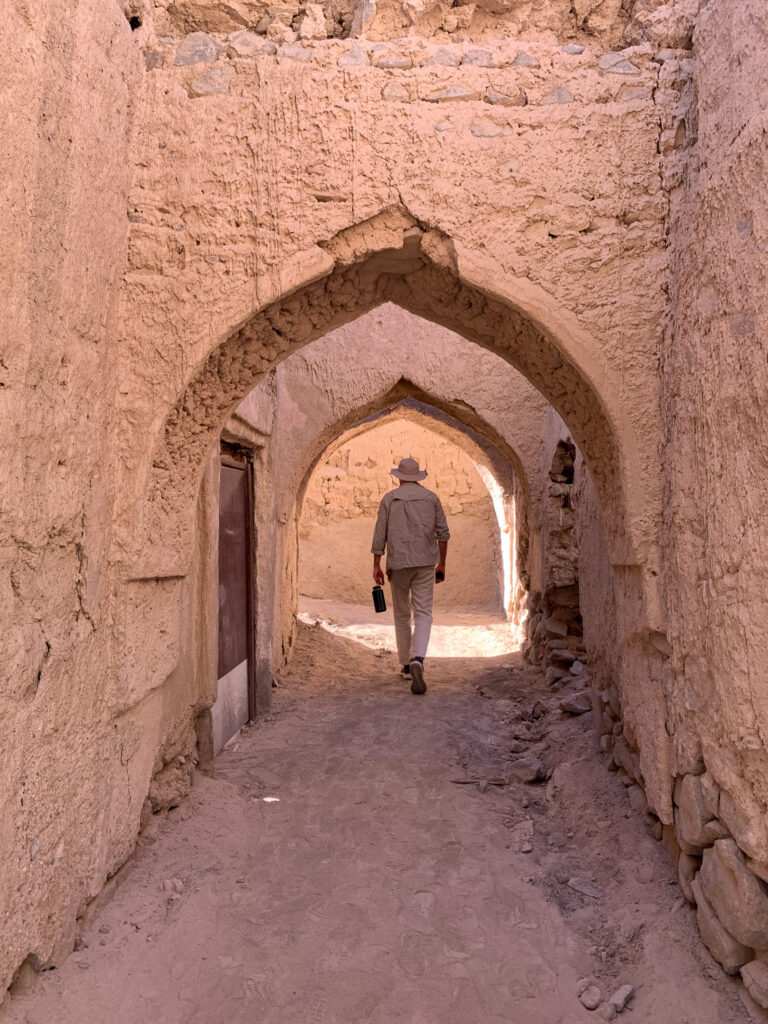
From the museum we continued driving southwards and detoured at Old Ibra Al Qanater – an abandoned village. We accidentally drove through the tight old roads with our massive SUV. We ended up parking in the riverbed and walking back into the village to explore a bit and get a cold drink and cake at a small espresso bar.
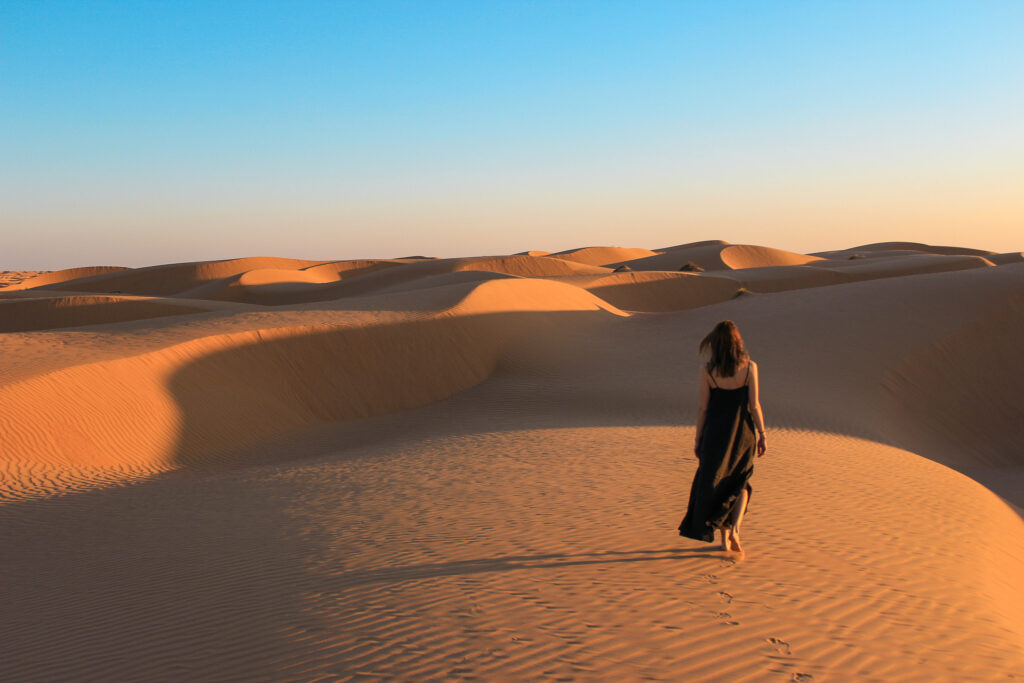
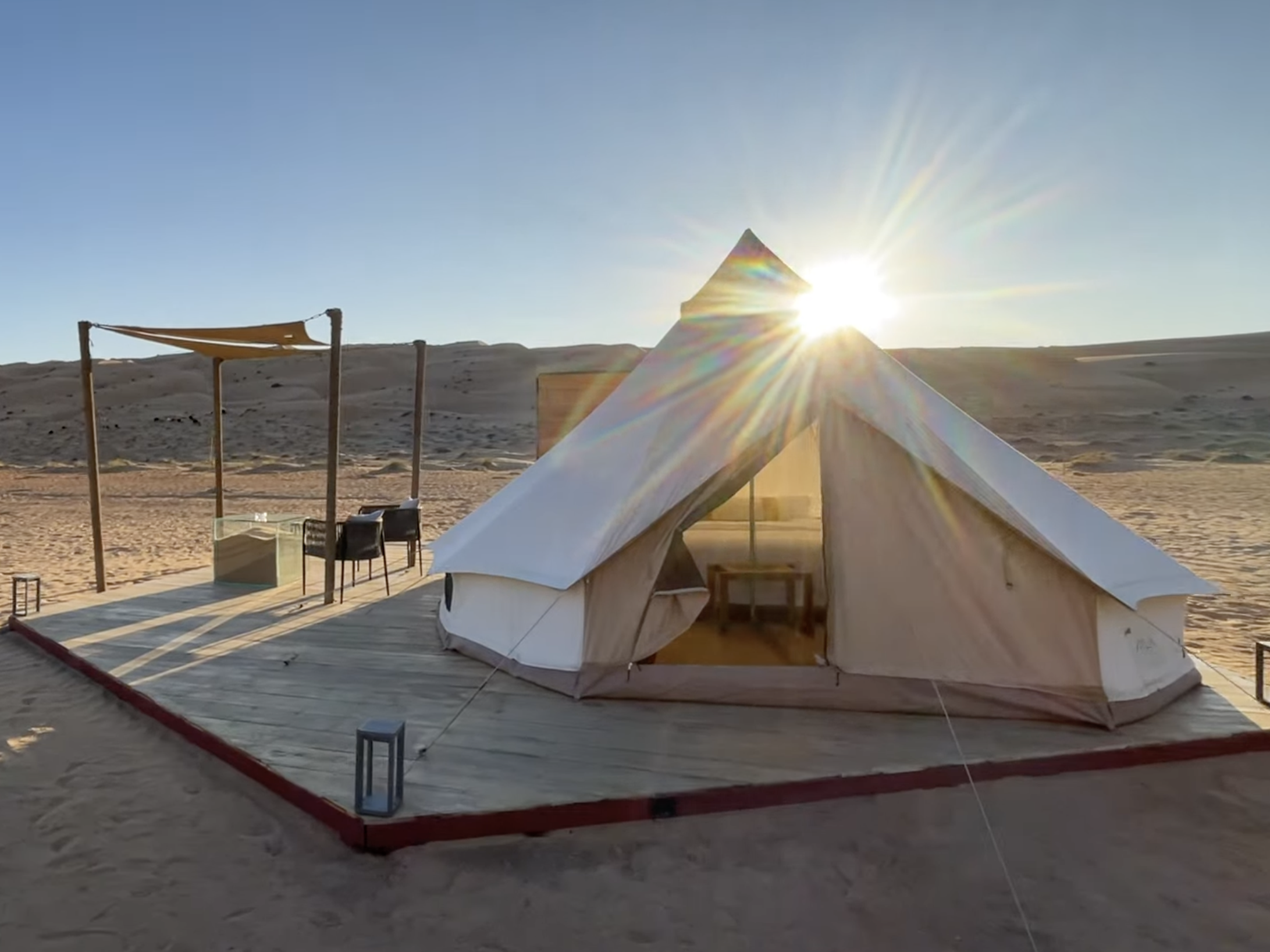
The last leg of the trip took us to Wahiba Sands where we opted to book accommodation in a tented camp. We didn’t feel like cleaning up sand from our own tent the next morning and after a sleepless night in Nizwa we were craving a bit of luxury. We entered via Bidiyah where we first let some air out of our tires at a local petrol station before meeting the camp owners at a meeting spot and following them in to to the dunes. That evening we opted to hike into the dunes a bit and have a sunset picnic.
Day 6: Wahiba Sands to Fins Beach
The next morning we drove back out towards Bidiyah with no one guiding us out this time, but luckily we managed to find our way out of the desert. After refilling our tires we drove off to Wadi Bani Khalid. To head here, make sure you follow directions to the coordinates: 22.61453496455781, 59.09395689284104. Otherwise you might accidentally find yourself very much not at the wadi. The wadi is free to park at and enter. It’s an easy walk to access all of the pools. I would recommend arriving early as it does tend to fill up quickly with families.
From the wadi we continued driving onward to Sur. We didn’t find that there was that much to see and do here, despite it being one of Oman’s larger seaside towns. We continued northwards on the motorway to Bibi Maryam Mausoleum Qalhat. Unfortunately we couldn’t get very close to it or see it well as it is temporarily closed.
We then looked for a camping spot – originally we wanted to camp at Tiwi beach, but the beach is incredibly small and was already packed with campers.
We drove onwards towards Fins Beach. We ended up finding a camping spot near the coordinates 22.899458809385308, 59.22482651506505. To get there, there’s no motorway exit. Instead you will need to simply drive off of the motorway, preferably by following one of the many informal jeep tracks paved by the many cars that have come to Fins Beach before you.
Day 7: Fins Beach to Muscat
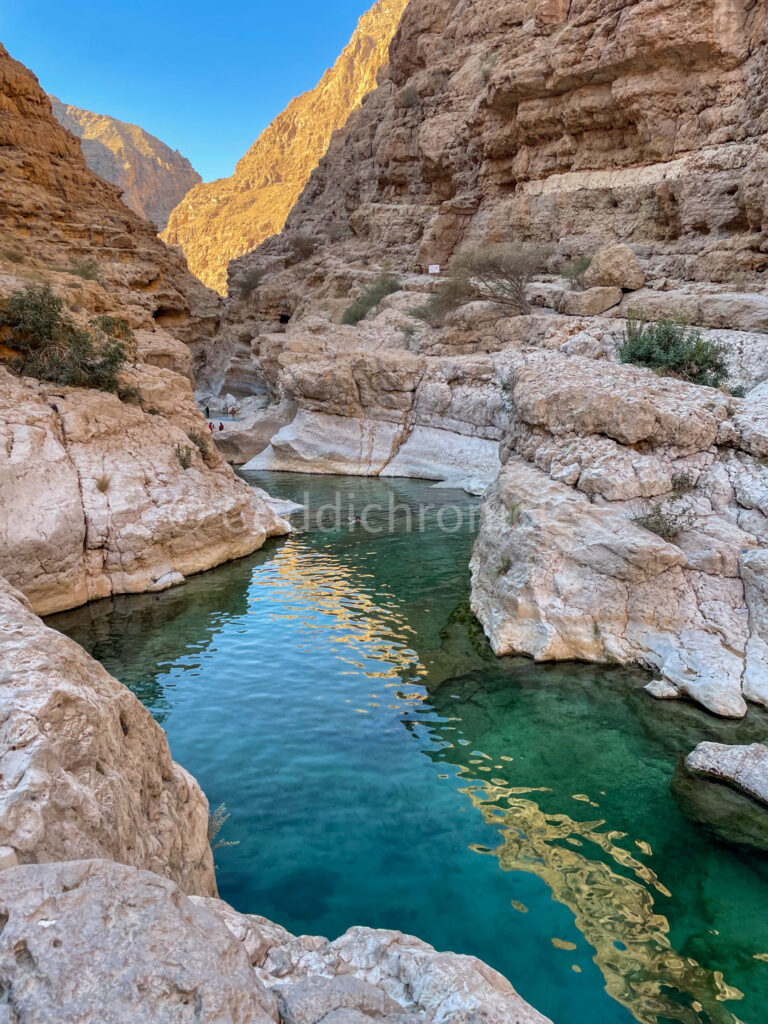
The next morning we made an early start to Wadi Shab – our favourite wadi of the trip. The adventure begins with a short boat ride across the river (approximately 1 Omani rial per person), followed by a scenic hike (approximately 45 minutes one-way) through the wadi’s rocky trails. Along the way, you can swim in crystal-clear pools and, for those willing to explore further, reach the famous hidden cave with its waterfall.
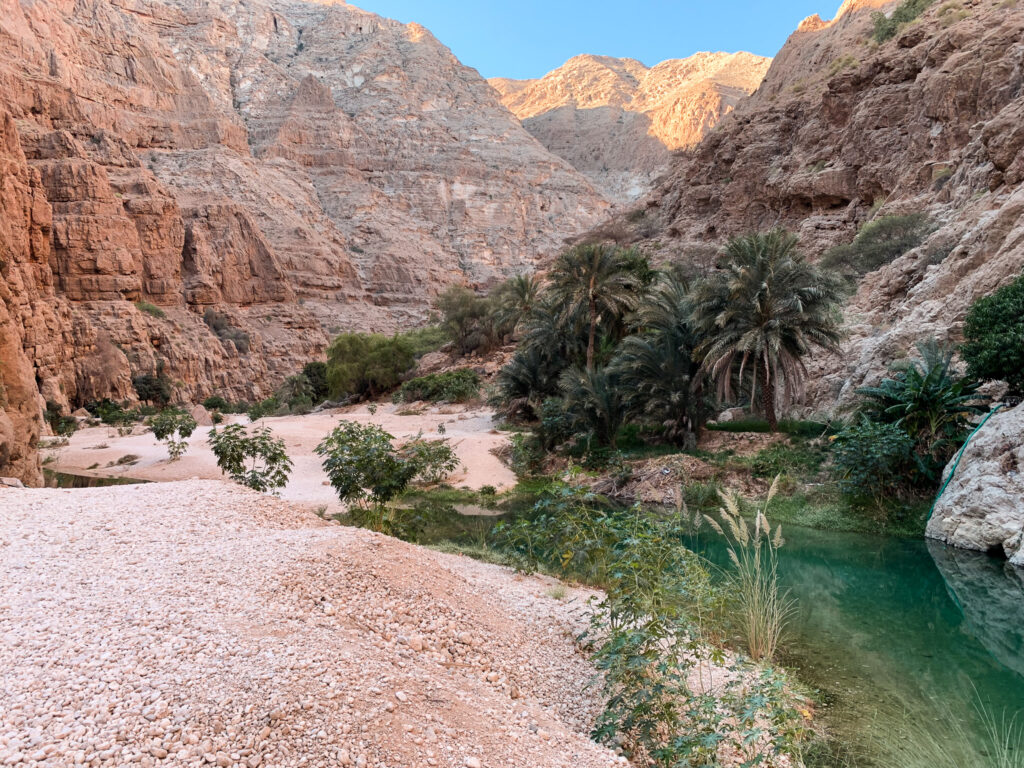
To reach the cave, you’ll need to swim a bit along the pools (about 200-300 metres). I’d recommend bringing a drybag along this to store your valuables in. the cave itself is accessible via a narrow entrance – my head managed to fit through over the water by going sideways, but some chose to swim in under the water.
In hindsight, we could have easily managed Wadi Bani Khalid in the morning and Wadi Shab in the afternoon of the same day and thereby had more time on our final day to explore Muscat.
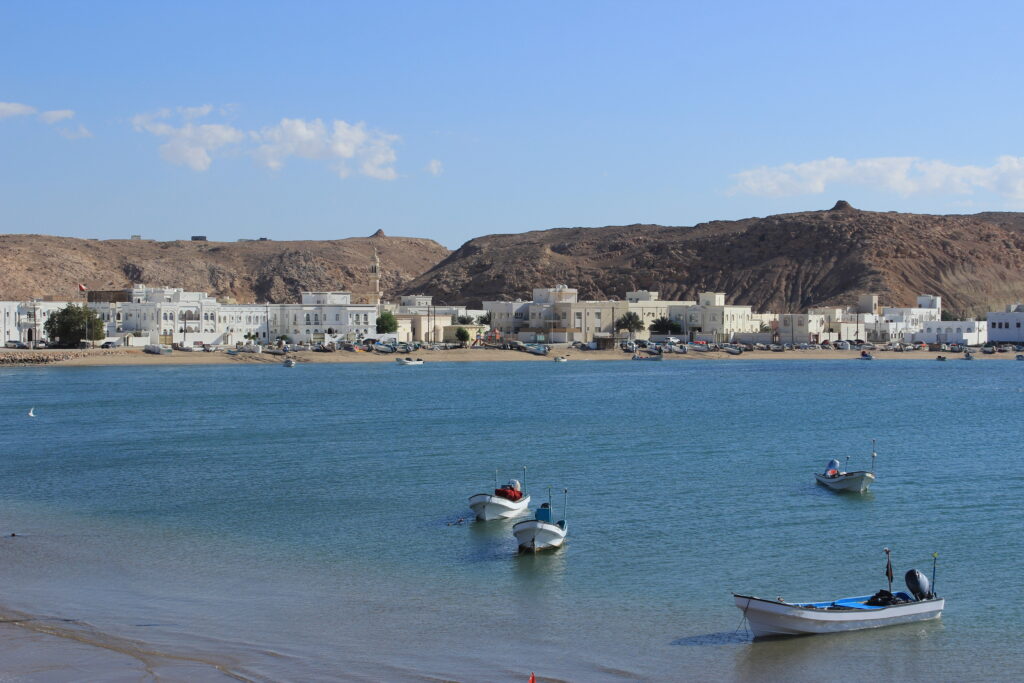
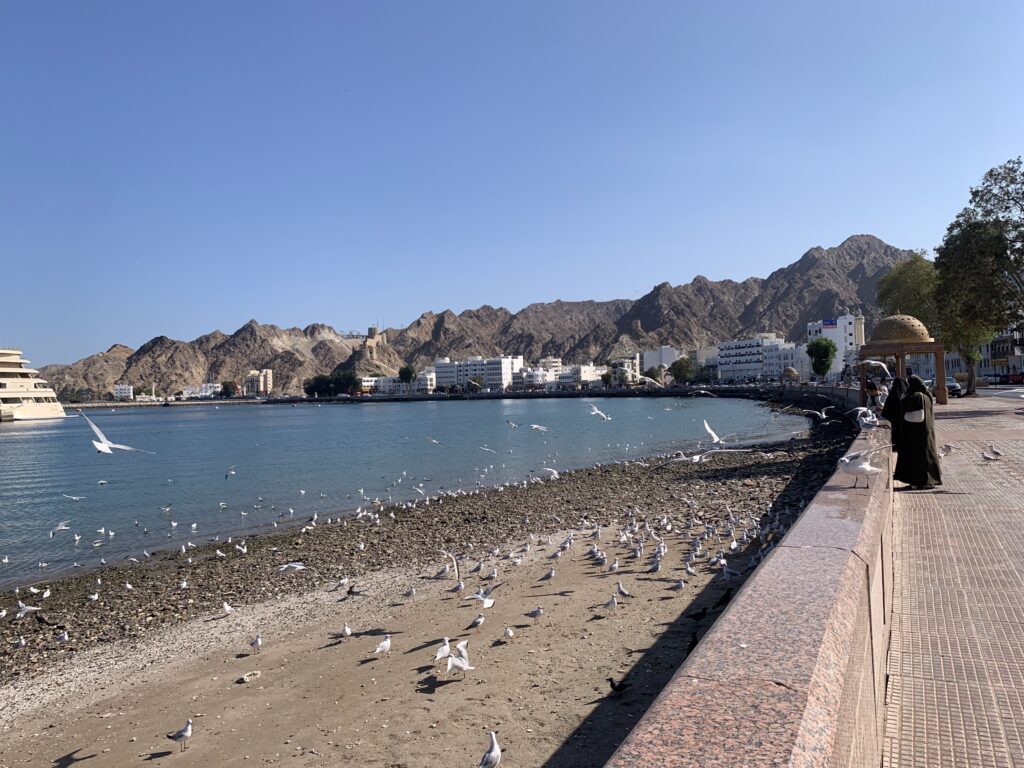
After the refreshing couple of hours in the wadi, we drove back to Muscat, just a short distance away on the motorway. We stopped for lunch at Aroos Al Bahar Fish Restaurant where we could choose the fish we wanted to eat which was then freshly grilled for us. The restaurant is in a pretty part of the old city, not far from the ruling family’s palace. There’s a promenade that you can walk along with views of the harbour (and the sultan’s yacht) and a souq you can get lost in on the other side.
While we had wanted to visit the Sultan Qaboos Grand Mosque, it wasn’t open to visitors when were there. The opening hours are fairly limited from 8 to 11am, and closed to non-Muslim visitors on Fridays.
How to get around: Renting a car in Oman
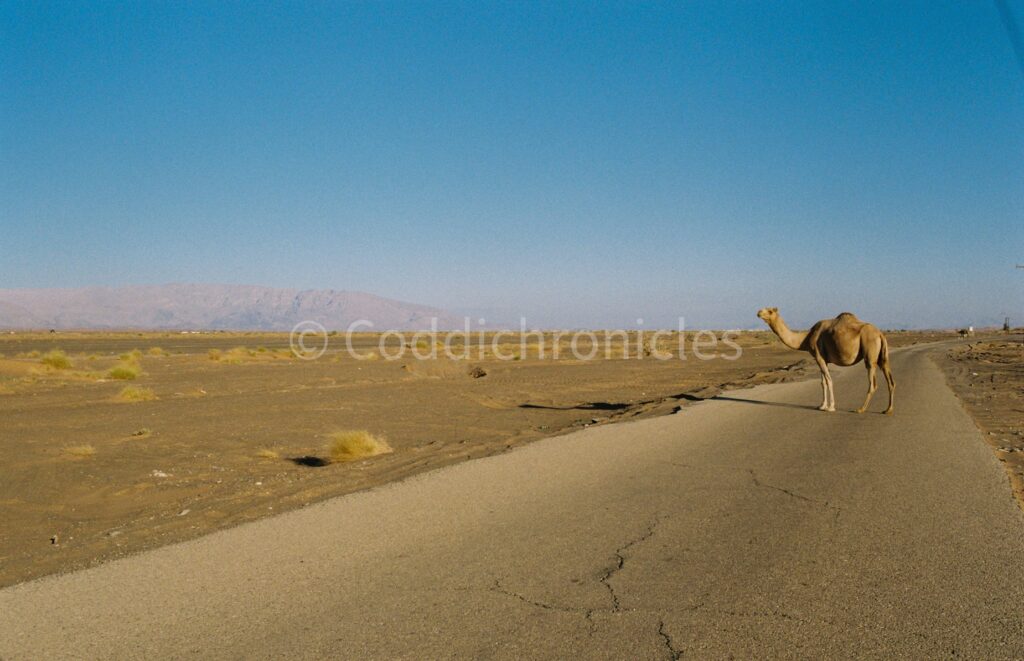
Renting a car is one of the best ways to explore Oman, giving you the freedom to explore at your own pace. Roads are generally well maintained and easy to navigate. Petrol is also super inexpensive. Generally, a 4WD is not needed, however, if you want to visit Jabal Al Akhdar you will need a 4WD. There are police who will check that your vehicle is a 4WD before allowing you to drive up the road (it’s steep, but it’s well paved – we’d driven worse in a 2WD).
You also need a 4WD if you want to drive into the desert yourself. You can get your tires deflated a bit at a petrol station before you enter the desert and refilled when you leave. If you don’t rent a 4WD, that’s fine as well – camps will offer to drive you for a fee.
We opted to rent a 4WD from the Muscat airport (a Toyota Fortuna booked via DiscoverCars) because it wasn’t too expensive and we weren’t entirely sure if a sedan would be fine for all the roads we wanted to go on.
We did not need an international driver’s licence to rent a car in Oman. A driver’s licence in English plus a credit card, were enough.
Where to stay overnight
Initially our plan was to wild camp every night of the trip. But that was before we found out that I was pregnant. So we ended up doing a mix of camping and hotels.
We were able to book as we went on Booking – early December wasn’t super packed with tourists. We ended up getting accommodation in Muscat the early morning we arrived and the night we flew back (Studio M Muscat and Mercure Muscat) – both hotels were totally fine for the night. In Jabal Al Akhdar, we stayed in JA Accom which was a nicely laid out one-bedroom house with a private jacuzzi in the back garden. In Nizwa, we stayed at Allathbiah Inn which I cannot recommend – the bed was way too hard.
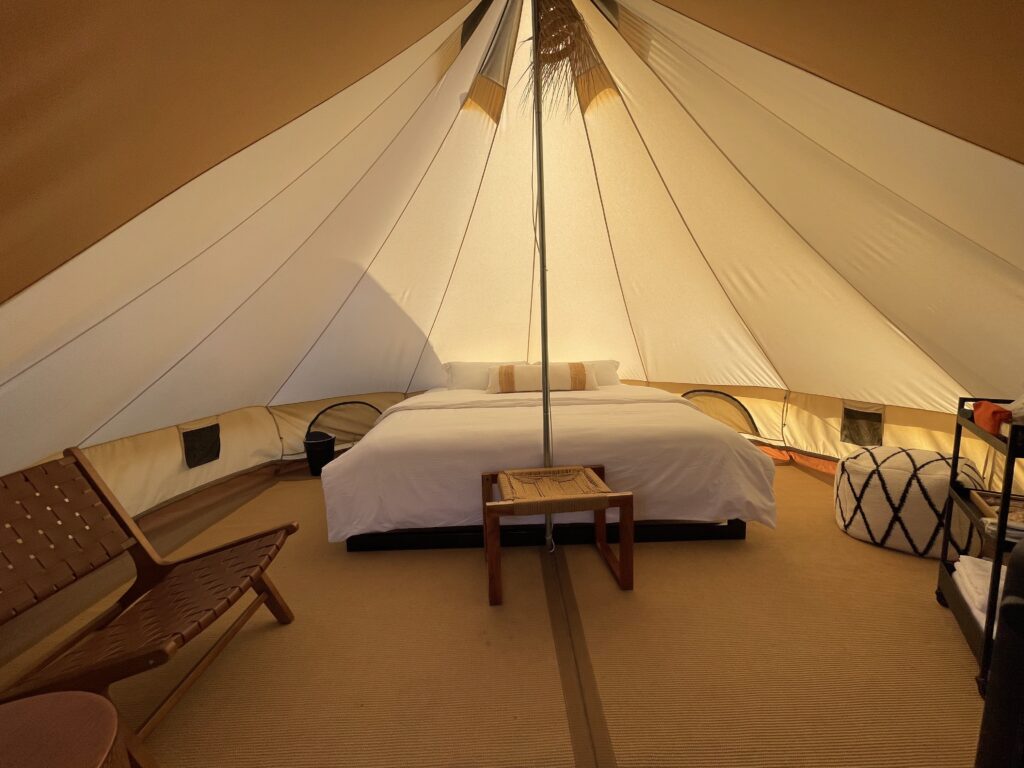
Finding a good desert camp in Oman can be difficult. There are many large camps but these tend to be noisy. We wanted to stay somewhere a bit more remote and we didn’t want to hear people driving around on the dunes. We ended up Ayla Bidiyah which was perfect. It was on the pricier end of the camps, but given it only had space for 5 couples and was far away from the masses of the other camps, it was well worth the price. Plus the breakfast was great.
Camping in Oman
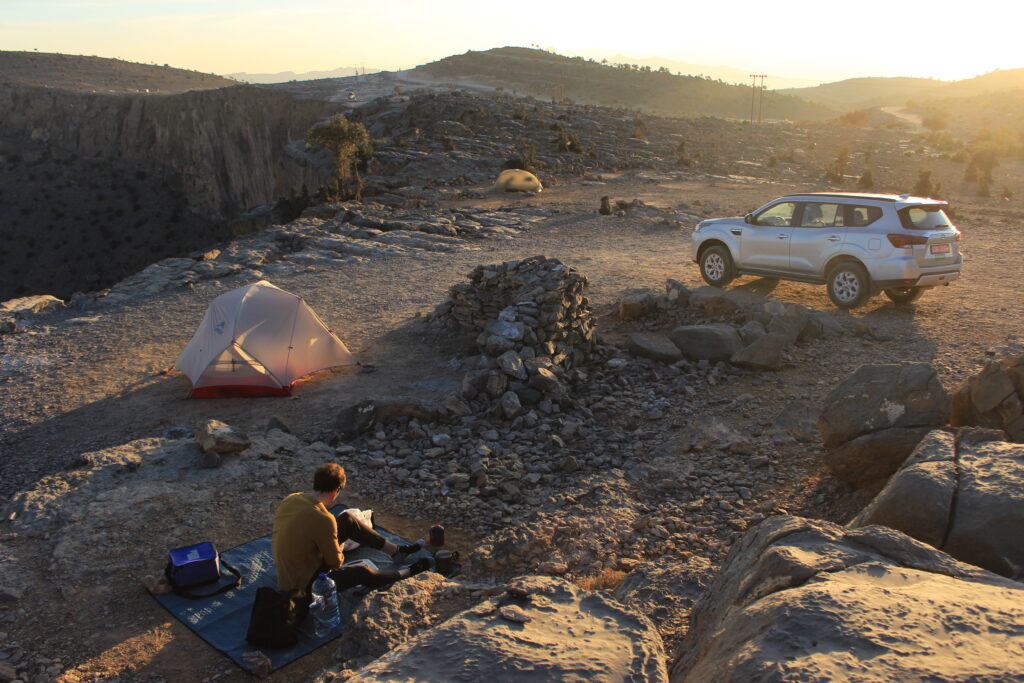
Wild camping is allowed in Oman – you’ll find locals and tourists alike setting up camp across the country. It’s really easy to find spots to wild camp, whether by a wadi, beach or even alongside the road. Though a word of caution – if heavy rains are predicted, do not camp in a wadi as they are prone to flash floods. Also in December, the sun sets by around 17:00 which made for early evenings in bed. We chose to camp in some of the more remote and stunning locations, including at Jebel Shams and Wadi Damm. We also camped at Fins Beach.
Jebel Shams technically is only accessible with a 4WD, but a skilled driver could manage in a sedan. There were plenty of camping spots along the ridge of the canyon with excellent views and without too many other people close by. There’s no running water at the top of the canyon, so be sure to bring enough (and food) before you drive up here for the night.
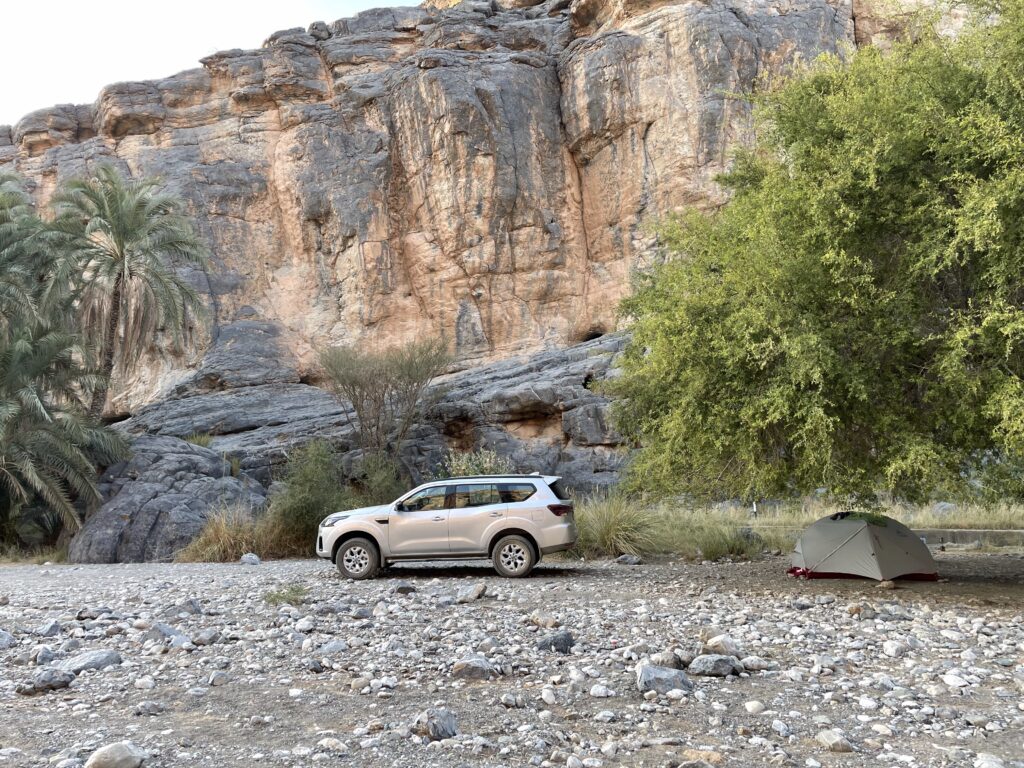
Wadi Damm was one of the more beautiful locations we camped. We drove a bit up the riverbed (again, likely manageable in a sedan) and set up our tent under a tree near ancient petroglyphs. There’s some running water nearby we were able to use to wash up our dishes after breakfast and dinner. We were the only people camping in the wadi the night we were there, but it was quite safe.
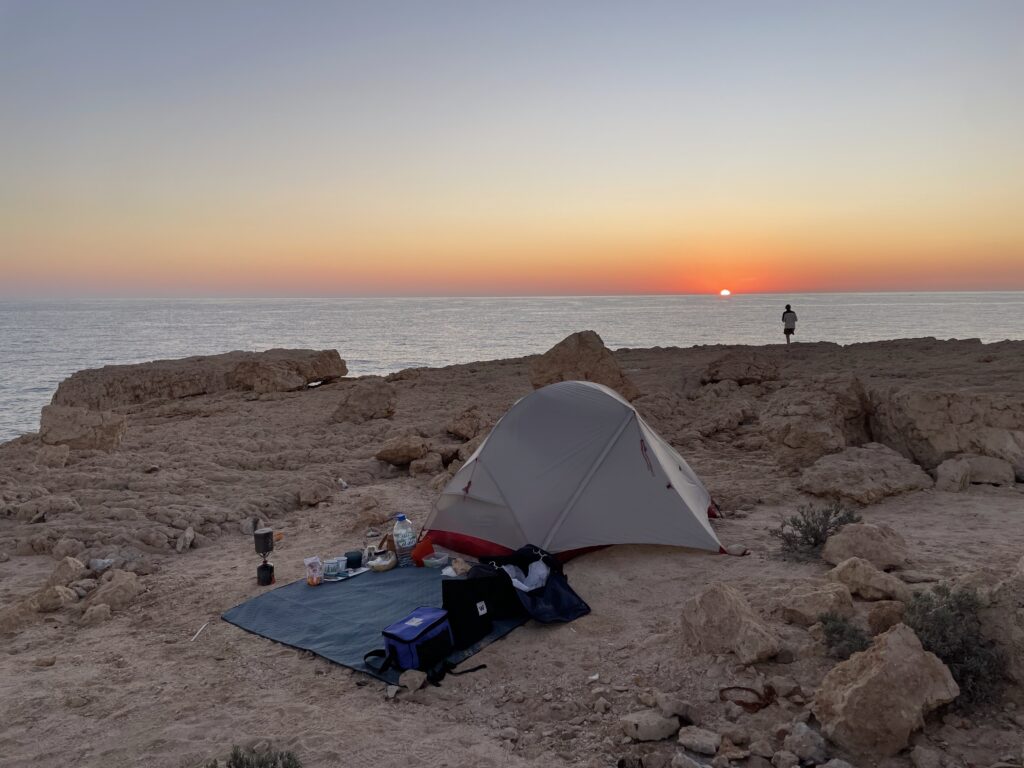
We arrived relatively late at Fins Beach (about an hour before sunset on a Friday). Most of the nice camping spots were already taken by large groups of locals. We did manage to find something by driving for a bit along the cliff. There’s a nice view of the sunset from the beach, but otherwise you can’t easily access the water. We were also disappointed by all the trash everywhere. Also, note, there isn’t much privacy and no fresh, running water. Camping on a weekday would be fine here, but on the weekend I regretted we didn’t find a hotel or just continue onwards to Muscat.
How to dress in Oman
When visiting Oman, it is best to dress modestly out of respect for local customs. Lightweight, loose-fitting clothing is ideal for the country’s warm climate, with shoulders and knees generally covered in public places. For women, carrying a scarf can be useful when visiting mosques or more conservative areas. At wadis such as Wadi Shab, practical clothing is recommended. Wear comfortable hiking clothes, sturdy footwear for rocky paths, and bring swimwear for the pools. While swimming, many visitors choose to wear modest swimwear, especially in areas where local families are present. I personally wore my quick dry t-shirt and running shorts rather than a bikini. When we did the Balcony Hike, I also wore shorts due to the heat. But otherwise I tended to wear a long summer dress and top (which also helped against the sun).
When is the best time to visit Oman?
The best time to visit Oman is between October and April, when cooler temperatures make it ideal for exploring. Daytime temperatures are pleasant, making outdoor adventures, beach trips, and desert camping far more comfortable. If you’re hoping to avoid the peak tourist season, consider traveling in October, November, or March, when the weather is excellent and crowds are generally lighter.
We visited in the first half of December, before the crowds picked up, which was perfect for us. We got to escape some of Europe’s winter. The weather was perfect for swimming in the wadis, doing light hikes (less than 5km), and visiting the cities. We did see some more long distance hikes. Despite being avid hikers, given the heat, lack of water along the way, and exposure to the sun, these didn’t spark our interest. That said, in early December, the pomegranate terraces in Jabal al Akhdar were sadly quite dry and dead. March/April would have been better timing for that stop.